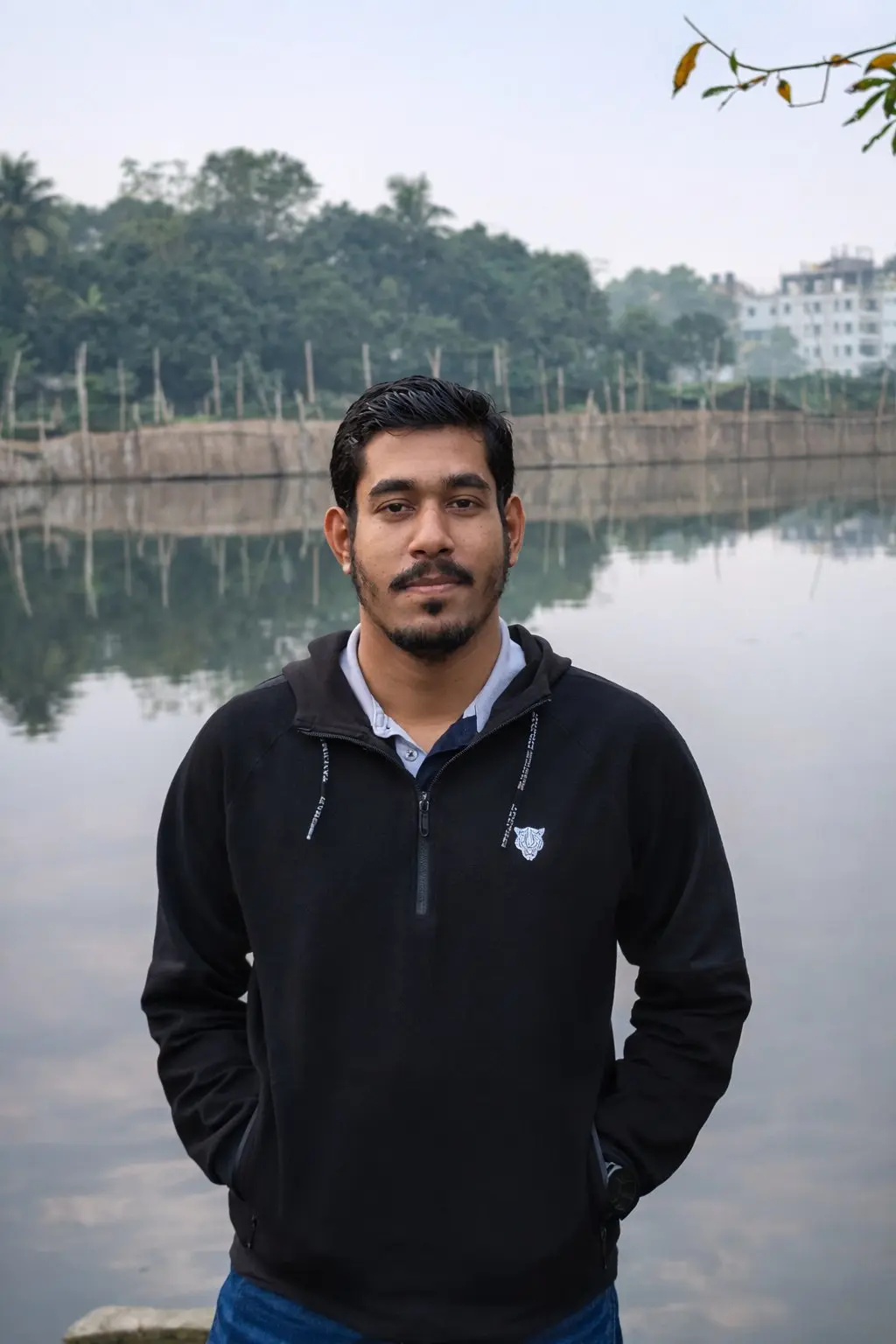
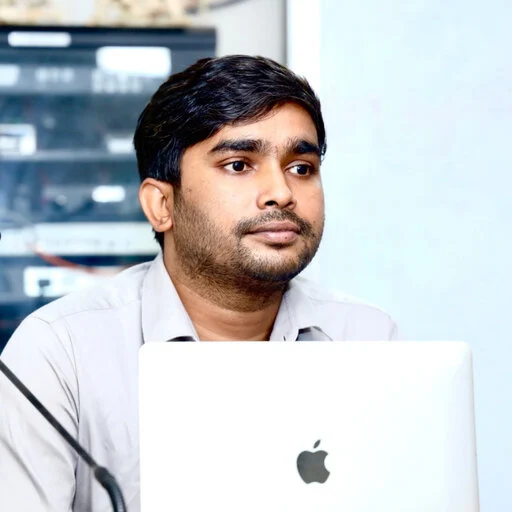
M. S. SARKER MSc Research Applicant
Prospective Fall 2026 Thesis MSc Applicant

Md. Salauddin
Sarker

Seeking a funded thesis-track MSc position abroad to research how Explainable AI (XAI) and trustworthy machine learning can safeguard agricultural, time-series, and industrial decision systems.

3.84 B.Sc. CGPA (Dean's x2)
Q1 Featured Springer Pub
6.5 IELTS English Band
5 Papers & Manuscripts
Md. Salauddin Sarker
For Supervisors

MSc Research Fit.

I am targeting a funded, thesis-based MSc abroad where I can contribute interpretable, reproducible, and deployable machine-learning pipelines from day one.

  • IntakeFall 2026 · thesis track
  • FundingSeeking fully funded
  • EnglishIELTS 6.5
  • B.Sc. CGPA3.84 / 4.00
  • Output3 published · 1 Q1
Why I fit your lab

Research Interests

Explainable AI (XAI) attributions, Trustworthy ML, baseline Time-Series Forecasting, Agriculture AI diagnostics, and Educational Data Mining.

Qualifications

Featured Q1 review (Springer Nature), IEEE conference papers, CGPA 3.84/4.00, two-time Dean's List, IELTS 6.5.

Research Practice

Reproducible experiments, systematic baselines, clean documented notebooks, PostgreSQL pipelines, and rigorous validation.

Availability

Open to funded MSc/PhD thesis supervision, Research Assistant (RA) tracks, and graduate research for Fall 2026.

Proposed MSc Research Agenda
Q1

Are post-hoc explanations actually faithful?

Measuring whether SHAP, LIME, and Grad-CAM attributions align with verified domain evidence in high-stakes vision (crop pathology, medical screening) — not just plausible-looking heatmaps.

Q2

Trustworthy ML on small, imbalanced clinical data.

Combining feature selection (RF/RFE/ANOVA), resampling (SMOTE/IHT), and interpretable ensembles so medical models stay both accurate and explainable on limited patient datasets.

Q3

When do simple baselines beat complex forecasters?

Rigorous evaluation of non-stationary time-series where honest OLS/ARIMA baselines expose whether deep models add real predictive value or just complexity.

Directions drawn from my published work — open to reshaping around a supervisor's active projects.

Scholarship Aspiration

Trustworthy
Data Science.

Architecting machine learning systems that maintain interpretability and robustness under high-stakes, real-world constraints.

My academic path started within Educational Technology & Engineering (EdTE) at the University of Frontier Technology, Bangladesh (UFTB). I quickly became interested in a core vulnerability: complex deep neural classifiers excel at mapping parameters, but their decision boundaries are opaque.

This inspired my research direction. By using local post-hoc explanations like SHAP, LIME, and Grad-CAM, I work to establish transparent, faithful attributions. My goal is to ensure model attributions align with verified physical domain evidence before predictions are integrated into agricultural or time-series systems.

Explainable AI (XAI)

Developing faithful, post-hoc local attributions for deep agricultural leaf-pathogen computer vision models and educational student-risk classifiers.

Dynamic Forecasting

Rigorously evaluating model stability and error margins across non-stationary time-series datasets against robust ARIMA/OLS baselines.

Md. Salauddin Sarker AI Research Context

"The complexity of industrial data requires the precision of neural interpretation."

Scientific Philosophy
Technical Toolkit

Build

Python SQL Java PHP Dart Linux / Shell

Model

PyTorch TensorFlow scikit-learn XGBoost ARIMA / OLS Computer Vision

Explain

SHAP LIME Grad-CAM Spatial Attention RF / RFE / ANOVA

Data & ERP

PostgreSQL Odoo 17 ETL Pipelines Tableau Metabase
Languages
Bengali — Native English — Professional (IELTS 6.5) Japanese — Basic (JLPT N5 track)
Publication Footprint

Research Evidence.

Verified scientific output in Q1 journal, conference, and manuscript-stage tracks.

3Peer-reviewed published
2Under review / in prep
Q1Springer · JIF 13.9
98.29%Best model accuracy
SCIE · Scopus · IEEEIndexing reach

Peer-Reviewed & Published

IEEE Conference Paper Author 2 of 6 IEEE Xplore Indexed

Bridging Climates: Weather Forecasting Using OLS and ARIMA Models with a Multi-Country Dataset

Arafat Hossain, Md. Salauddin Sarker, Aditya Rajbongshi, Most. Rakiba Khanom Jisa, Maria Afrin Bindu, Kayes Mohammad Abdullah.

IEEE 2nd International Conference on Computing, Applications and Systems (COMPAS 2025)

My contribution: methodology, code implementation, and the results section.

Abstract: This research presents a comparative diagnostic study of standard statistical models—Ordinary Least Squares (OLS) regression and Autoregressive Integrated Moving Average (ARIMA)—for predicting historical climate indicators. We utilize 61 years of longitudinal meteorological records across Bangladesh, Saudi Arabia, Japan, and Russia. Standard residual tests confirm OLS yields lower prediction errors (RMSE 0.30) for baseline variables in agricultural forecasting.
@inproceedings{hossain2025bridgingclimates,
  title     = {Bridging Climates: Weather Forecasting Using OLS and ARIMA Models with a Multi-Country Dataset},
  author    = {Hossain, Arafat and Sarker, Md. Salauddin and Rajbongshi, Aditya and Jisa, Most. Rakiba Khanom and Bindu, Maria Afrin and Abdullah, Kayes Mohammad},
  booktitle = {2025 IEEE 2nd International Conference on Computing, Applications and Systems (COMPAS)},
  year      = {2025},
  publisher = {IEEE},
  doi       = {10.1109/COMPAS67506.2025.11381792}
}
IEEE Conference Paper Author 5 of 6 IEEE Xplore Indexed · 94.74% Accuracy

Bridging Educational Gaps: Predicting Retakes Among Bangladeshi Undergraduates with Machine Learning and Explainable AI

Nusrat Zahan Nila, Md. Ali Mahmud Pritom, Fatema Tuz Johora, Aditya Rajbongshi, Md. Salauddin Sarker, Md. Ashrafuzzaman.

IEEE International Conference on Computer and Information Technology (ICCIT 2025)

My contribution: explainable AI (XAI) analysis and the results section.

Abstract: Course failures and retakes severely interrupt academic timelines in higher education. We present a predictive model using records from 474 Bangladeshi undergraduates, deploying an ensemble soft voting classifier that achieves 94.74% risk-prediction accuracy. We incorporate SHAP and LIME explanatory pipelines to isolate core socio-economic and preparatory vectors responsible for academic risk.
@inproceedings{nila2025bridgingeducational,
  title     = {Bridging Educational Gaps: Predicting Retakes Among Bangladeshi Undergraduates with Machine Learning and Explainable AI},
  author    = {Nila, Nusrat Zahan and Pritom, Md. Ali Mahmud and Johora, Fatema Tuz and Rajbongshi, Aditya and Sarker, Md. Salauddin and Ashrafuzzaman, Md.},
  booktitle = {2025 International Conference on Computer and Information Technology (ICCIT)},
  year      = {2025},
  publisher = {IEEE},
  doi       = {10.1109/ICCIT68739.2025.11491491}
}

Under Review & In Preparation

B.Sc. Thesis First author Medical AI · Under Review · 98.29% Accuracy

Enhancing Parkinson's Disease Prediction Using Feature Selection Models (RF, RFE, and ANOVA) and Explainable AI: A Comparative Analysis of Machine Learning Performance

Md. Salauddin Sarker, et al.

Undergraduate (B.Sc.) thesis · Explainable Medical AI · Speech-based Parkinson's detection · Manuscript under review

My contribution: dataset collection, methodology design and implementation, and the results section — primarily code implementation.

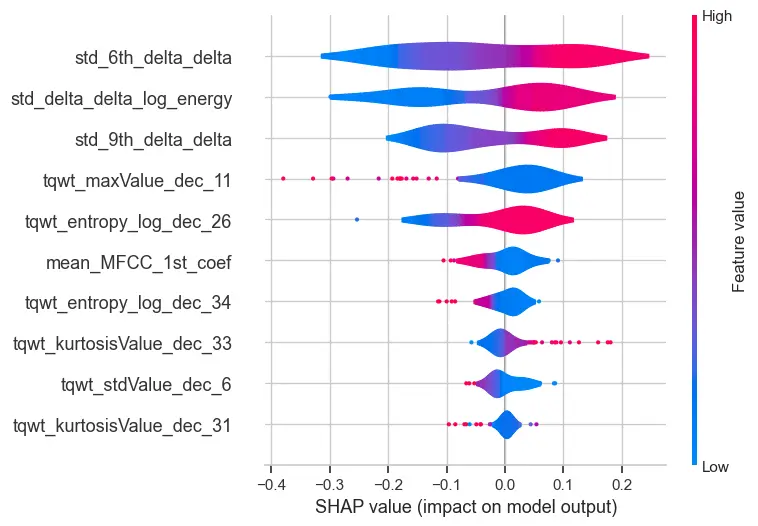
Abstract: Speech disorder is a significant challenge for Parkinson's patients, impairing effective communication; early detection is essential to minimise movement issues and disability. While prior work detects Parkinson's with machine learning, a gap remains in the explicability of those models. We propose a system that both detects Parkinson's disease and analyses the reasons behind predictions to identify the actual causes, increasing transparency and trustworthiness. Using a medical dataset of 188 patients (mixed text and numerical features), we apply three feature-selection methods after preprocessing, and two balancing algorithms (SMOTE and IHT) to address class imbalance — producing six unique datasets. An ensemble learning approach is compared against seven individual models; the weighted ensemble achieves the highest accuracy at 98.29%. Two explainable AI (XAI) techniques ensure transparency and interpretability of the chosen model. The proposed system is expected to play a vital role in the medical sector.
In Preparation First author Edge AI · Industrial inference

EdgeVision: Quantization-Aware Inference for Industrial Edge

Md. Salauddin Sarker, et al.

Positioned for Industrial Edge Inference / IDAA Forum Track

Abstract: This research implements post-training 8-bit integer quantization schemas for industrial visual models. By adapting low-power ARM architecture nodes, the framework compresses standard CNN parameter blocks, successfully achieving sub-10ms edge inference latencies while protecting overall leaf classification fidelity.
Selected Implementations

Research &
Case Studies.

99.42% Rice-leaf disease accuracy Attention CNN + Grad-CAM · 42 FPS on edge
98.29% Parkinson's detection Weighted ensemble + XAI · B.Sc. thesis
94.74% Student-retake prediction Soft-voting + SHAP/LIME · IEEE ICCIT
RMSE 0.30 Multi-country forecasting Honest OLS/ARIMA baseline · 61 yrs data
Case Study #01 — Deep Learning + XAI

Rice Leaf Disease Detection

Building an accurate and interpretable classifier for sustainable agri-diagnostics.

The Problem

Need for reliable, transparent identification of leaf pathogens in field conditions.

The Data

Multi-class leaf image dataset with diverse environmental backgrounds.

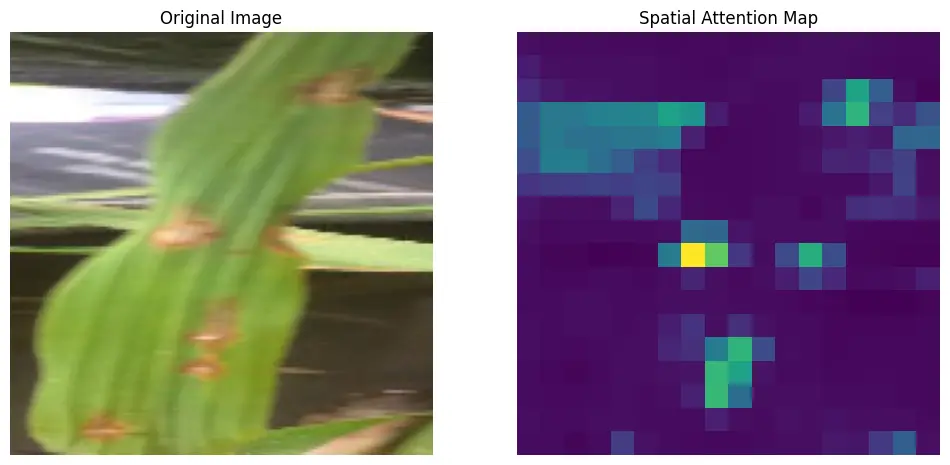
Approach: Transfer learning (VGG16/ResNet50/EfficientNetB0) + spatial attention mechanisms.

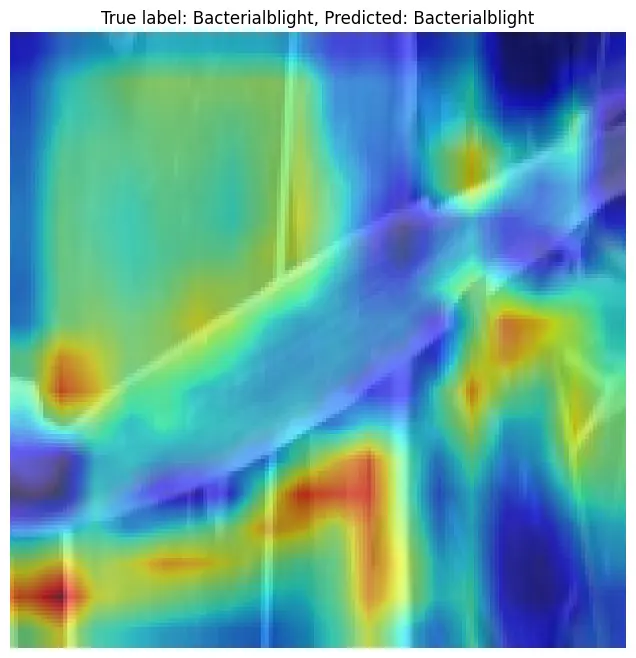
Explainability: Grad-CAM heatmaps for decision transparency and feature verification.

Results: 99.42% overall classification accuracy; sustained 42 FPS on mobile edge platforms.

RESEARCH IMPACT (MSc READY)

Demonstrated that spatial attention maps can pinpoint pathogenic regions in leaf images better than standard CNNs, crucial for trustworthy field diagnostic deployment.

Raw crop image Grad-CAM overlay
Drag overlay handle to sweep spatial attention maps
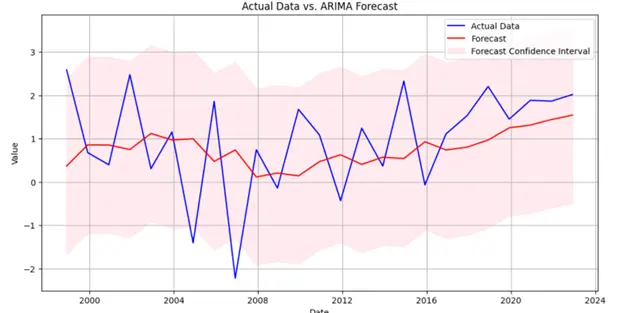
Weather forecasting baseline data
OLS vs ARIMA residual diagnostic mapping across 61 years of data
Case Study #02 — Time-Series Forecasting

Climatic Baseline Optimization

Evaluating OLS and ARIMA architectures across 61 years of meteorological data.

The Problem

Forecasting temperature and variables accurately across highly diverse meteorological zones.

The Data

61 years of multi-country historical temperature data (Bangladesh, KSA, Japan, Russia).

Approach: Hybrid ARIMA structures + OLS linear trends; tested stationarity and residuals.

Validation: OLS reached an RMSE of 0.30 for temperature forecasting in Bangladesh.

BASELINE DISCIPLINE

Proved that complex forecasting models need careful, standard OLS/ARIMA statistical baselines to evaluate whether true predictive novelty exists.

GitHub Profile
Case Study #03 — Enterprise Data Engineering

Industrial Churn Prediction

Connecting raw enterprise database transactions with custom predictive ML models.

The Problem

Aggregating scattered commercial flows into clean, structured data records ready for ML.

The Integration

PostgreSQL ETL pipelines combining Odoo Sales, inventory, and ledger databases.

Ecosystem: Integrated Odoo 17 ERP transaction workflows, optimizing relational queries.

Machine Learning: XGBoost and RandomForest classifiers evaluated using local SHAP importance.

Outcome: Reached 85% predictive accuracy on operational client retention flows.

Attribution Strength SHAP Importance
Contract Tenure 0.31
Customer Support Tickets 0.24
Transaction Frequency 0.18
Avg Order Volume 0.12
Applied Engineering Proof

Professional Experience.

Industry data-systems work that demonstrates the engineering rigor and reproducibility behind my research.

Redmin Industries Ltd logo

Senior Principal Officer — Software Developer (ERP)

Current
Redmin Industries Ltd
Apr 2026 — Present

Leading enterprise ERP and software development: designing Odoo modules, relational data models, and reporting workflows that turn raw operational data into auditable, analysis-ready systems.

Odoo PostgreSQL Python ERP Architecture
Q Cosmetics Ltd logo

Executive — Software Developer (ERP)

Q Cosmetics Ltd · Dhaka, Bangladesh

Jan 2025 — Mar 2026

Built the connective data layer between operations and decision-making: Odoo 17 ERP workflows, PostgreSQL ETL pipelines, and BI dashboards — converting raw transactional data into auditable, analysis-ready evidence.

35%

Faster order-cycle workflow via ERP rollout.

12×

Reporting cut from ~3 hours to ~15 minutes.

6+

Systems deployed across sales, inventory, purchase.

Odoo 17 PostgreSQL ETL Pipelines Python BI Dashboards
Trajectory & Certifications

Verified Credentials.

SSC Science

GPA 5.00 / 5.00

Dhaka Board

HSC Science

GPA 5.00 / 5.00

Dhaka College

B.Sc. in EdTE

CGPA 3.84 / 4.00

UFTB, Bangladesh · 2019-2024

Thesis: Explainable AI for Parkinson's disease prediction (weighted ensemble, 98.29%).

AI Statistics Robotics
MSc Track

Fall 2026

Seeking funded thesis supervision

Verified Certifications List
Click each credential to switch the high-resolution evidence scan on the right screen.
Document Evidence

Distinction & Engagement

Leadership & Community.

Academic honours, national innovation recognition, and elected leadership across engineering and language communities.

Dean's Award (2022 & 2024)

University of Frontier Technology (UFTB)

Recognised for top-tier academic performance across two non-consecutive cycles.

National STEAM Olympiad 2023

9th Nationally · Campus Ambassador

Selected campus leader for the national innovation drive; ranked top 10 nationally on technical pitch.

Vice President

UFTB STEAM Club

Led technical mentorship for 200+ members and organised engineering hackathons and innovation drives.

Executive Member

UFTB Robotics Club

Coordinated large-scale robotics competitions and cross-discipline engineering teams.

Japanese Secretary

UFTB Language Club

Drove multilingual academic exchange and Japanese (N5) learning initiatives for global readiness.

Faculty Endorsements

Academic Referees.

Official recommendations and academic credentials verified by university professors.

Farhana Islam

Farhana Islam

Assistant Professor & Chairman

Dept. of Educational Technology & Engineering

farhana0001@uftb.ac.bd

University of Frontier Technology, Bangladesh

Aditya Rajbongshi

Aditya Rajbongshi

Assistant Professor

Dept. of Educational Technology & Engineering

aditya0001@uftb.ac.bd

University of Frontier Technology, Bangladesh

For Prospective Supervisors

Considering a Fall 2026 student?

If your group works on Explainable AI, Trustworthy ML, time-series, or applied AI for agriculture, health, or education — I am funded-MSc ready and can contribute from day one.

Run honest baselines

Reproducible experiments with rigorous OLS/ARIMA and ML baselines before claiming novelty.

Build XAI evaluation

SHAP/LIME/Grad-CAM pipelines that test whether explanations are faithful, not just plausible.

Write & document

Publication-ready writing and clean, supervisor-friendly code — proven across 3 IEEE/Springer papers.

Inquiry & Collaboration

Get in Touch.

Open to MSc supervision, research collaboration, and inquiries regarding my scientific publications and deployments. Let's connect.

Phone / WhatsApp +880 1521-260707
Location Dhaka, Bangladesh

Message Prepared

Your email client has been opened with the inquiry prefilled. Click send inside your mail app!

Submitting opens your native mail client with the subject and body prefilled.